International training
Learn biofunctional dentosophy
Start at the skull base instead of only moving teeth.

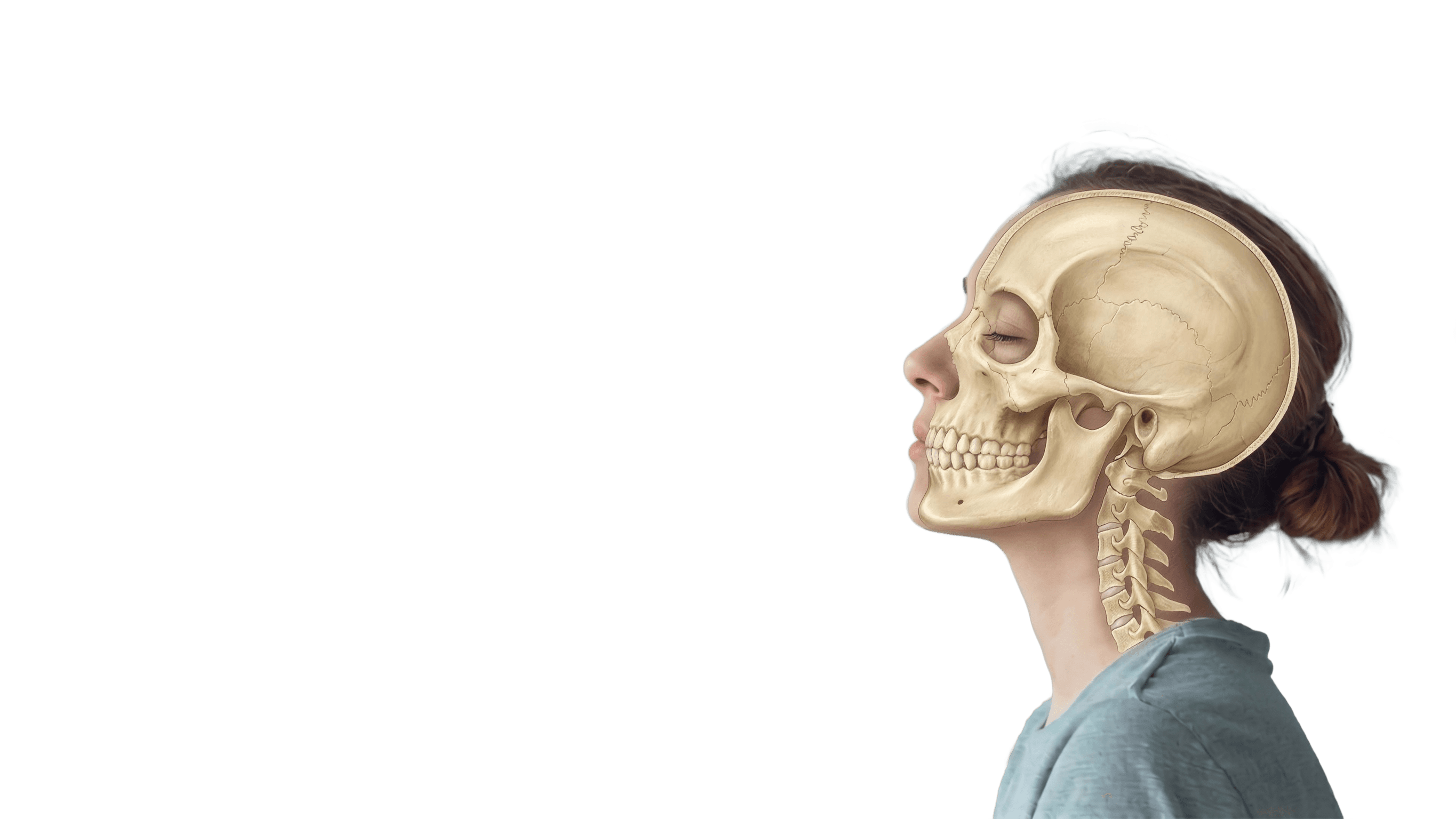
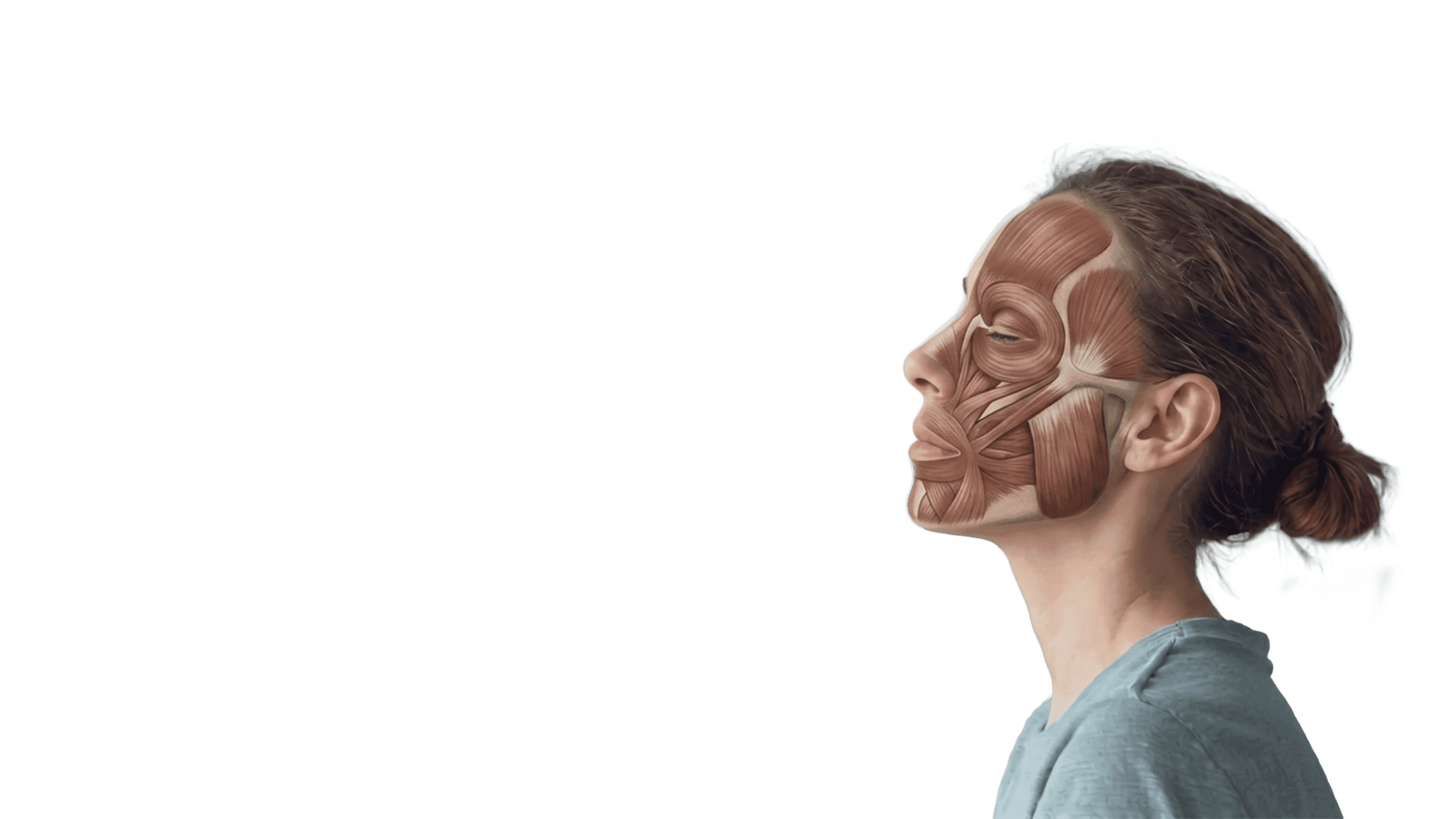
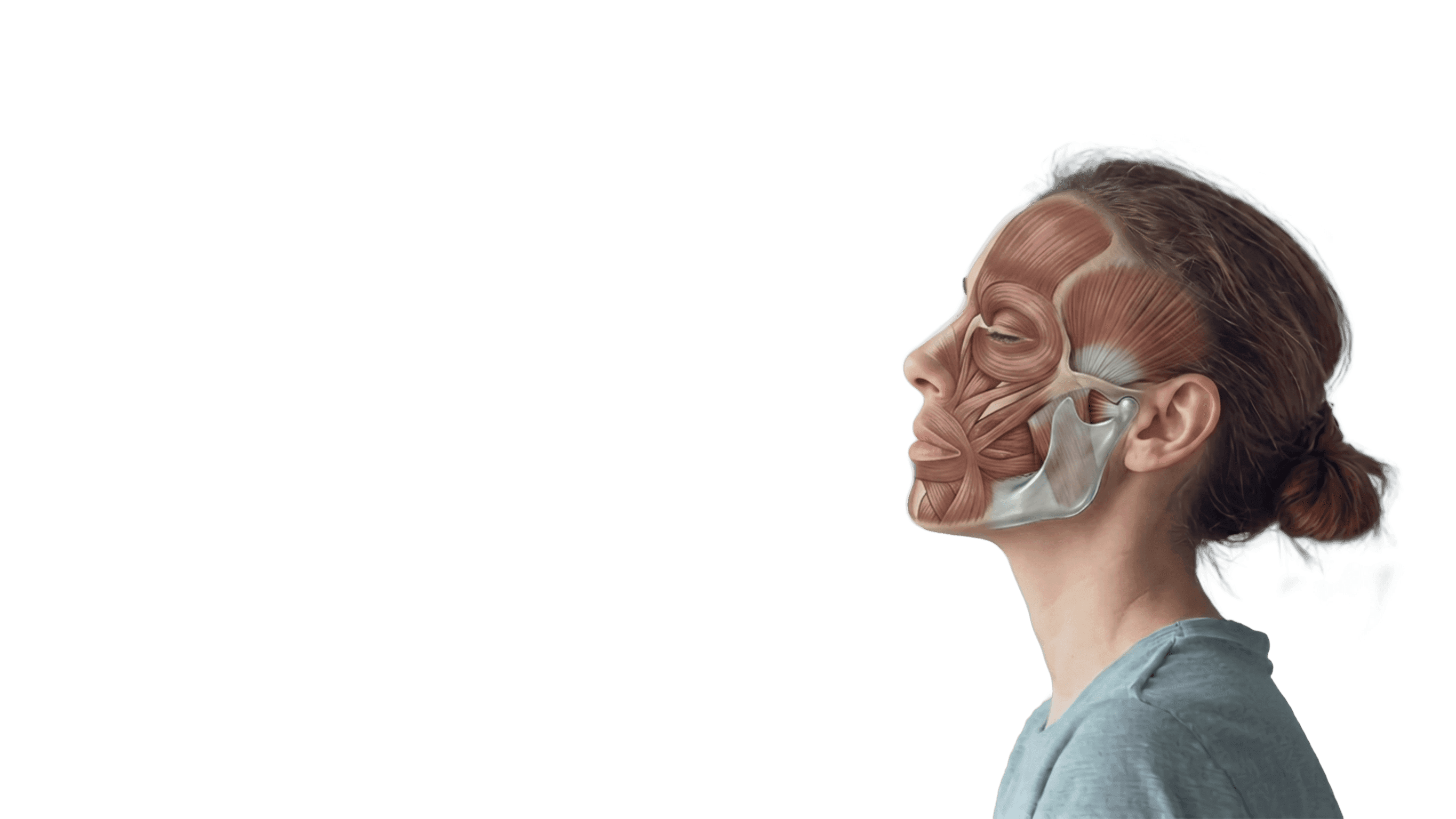
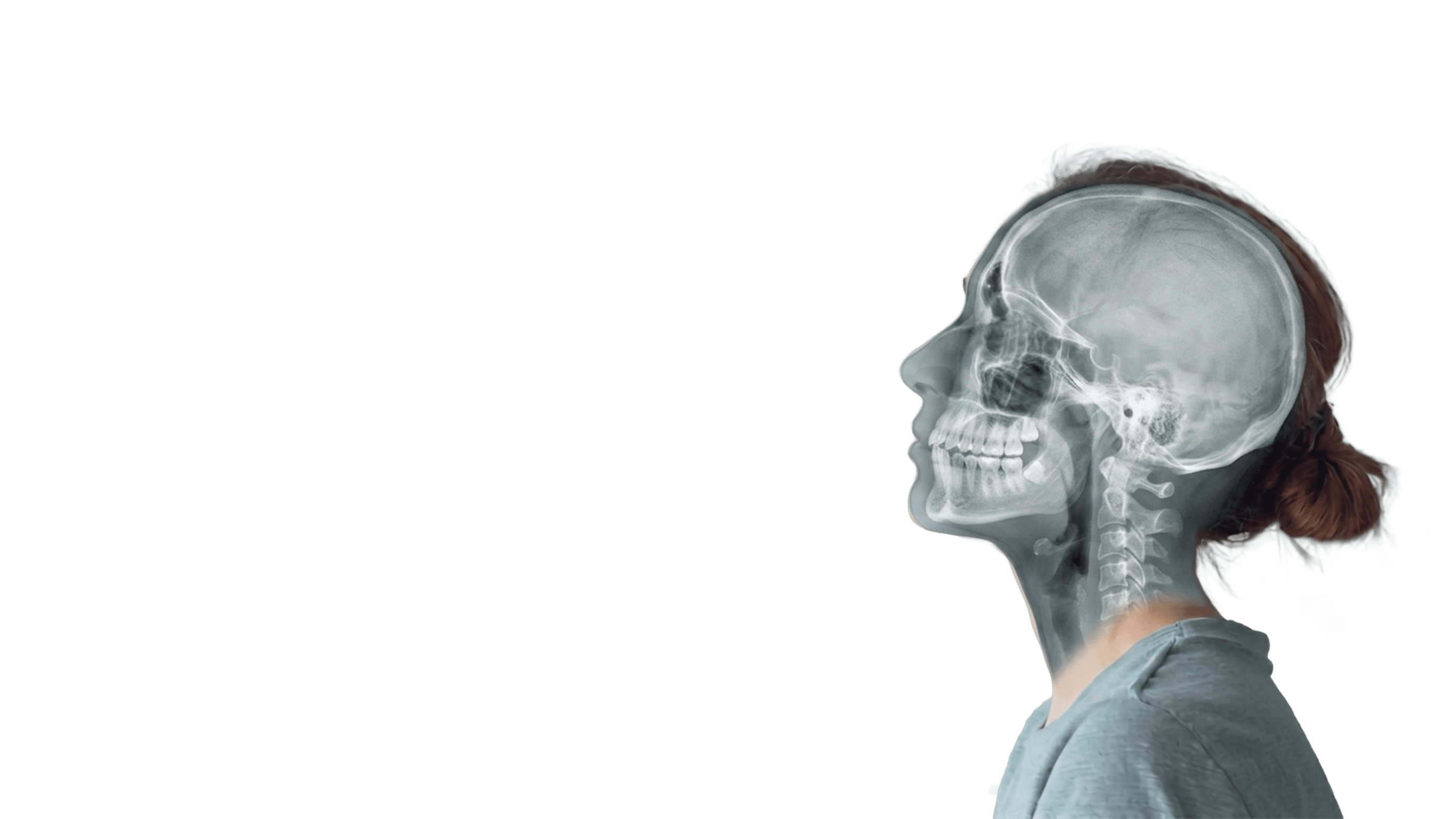
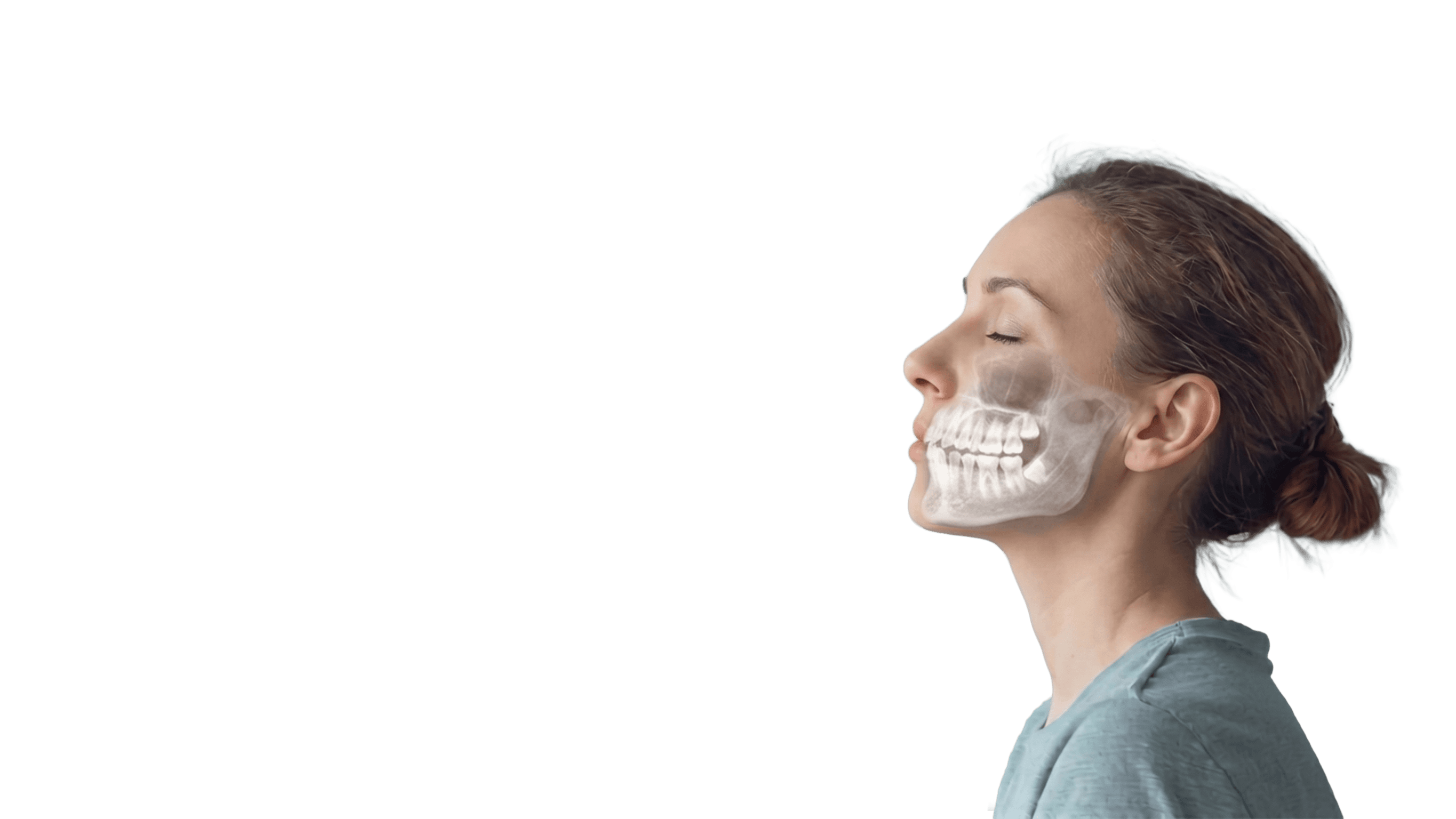

Biofunctional dentistry starts at the skull.

Did you know?
Crooked teeth are the symptom – not the actual cause.
It is not just the bite that is off. The system is out of balance.
Behind misaligned teeth there are often dysfunctions and structural misalignments in the craniofacial system: our skull bones.
We don't just look at the bite. We look for the cause behind it — and work on the system, not the symptom.
Indications
Where dentosophy starts
Nasal breathing, balanced chewing, correct tongue function, relief for the jaw joints: many complaints have their origin in the craniofacial system. Dentosophy starts exactly there — at the function, not the symptom. An overview of how far the system reaches.
Educational, biofunctional approach – functional diagnostics, interdisciplinary with ENT, sleep and general medicine. What professionals diagnose and treat in their own practice after the training depends on their professional licence.
Experiences
What people experience.
Visible change over time – cases from practice, each with the indication and what improved.
Cases from practice
 Before
 After
AfterIndication: Crowding in the lower jaw
The front teeth find their place
In this case the lower front settled and the arch became rounder.
 Before
 After
AfterIndication: Overjet
The front teeth meet
The protruding upper front teeth move back and the gap to the lower front narrows.
 Before
 After
AfterIndication: Crossbite in an adult
In adulthood too
Here the lateral crossbite corrected; the rows of teeth interlocked properly again.
 Before
 After
AfterIndication: Open bite
The bite closes
The front teeth make contact and the gaps close.
 Before
 After
AfterIndication: Mouth breathing
More room in the nose
Looking up into the nose: in this case the nasal openings widened and nasal breathing became possible.
Individual experiences from educational and therapeutic contexts: results vary and are not guaranteed.
Voices
We had an orthodontic consultation and wanted to try the functional route first. With our daughter it moved enough that she does not need braces — the therapy is complete.
Because of a crossbite and heavy overloading, one tooth was in question. Over the course of the functional work my bite situation changed; the tooth stayed.
I lived with hip pain for twenty years. Since working on my bite functionally, it is completely gone.
Training in Dentosophy
The training at a glance
A well-founded curriculum alongside practice, built on personal exchange.
- 12 months, alongside your practice
- Online modules + in-person seminar
- 5 patient sets to start right away · a network of 50+ practices worldwide
- Experience dentosophy on yourself as a participant
- Personal exchange with Dr. med. dent. Rebekka Hueber
What you will be able to do
- Recognise the functional causes of TMD, bruxism and mouth breathing in the craniofacial system — and work with them within your own scope
- Recognise in children when dentosophy alone is enough and when orthodontics must be added
- Classify severe malocclusions correctly, inform properly and refer in good time
- Recognise cases relevant to statutory classification (IV in Switzerland, KIG in Germany) and inform parents factually about grading and responsibility
- Accompany tongue-tie releases functionally, to avoid relapse
- Apply the balancer and myofunctional concepts in your own practice
Open to physicians, speech therapists, myofunctional therapists, osteopaths and physiotherapists as well.
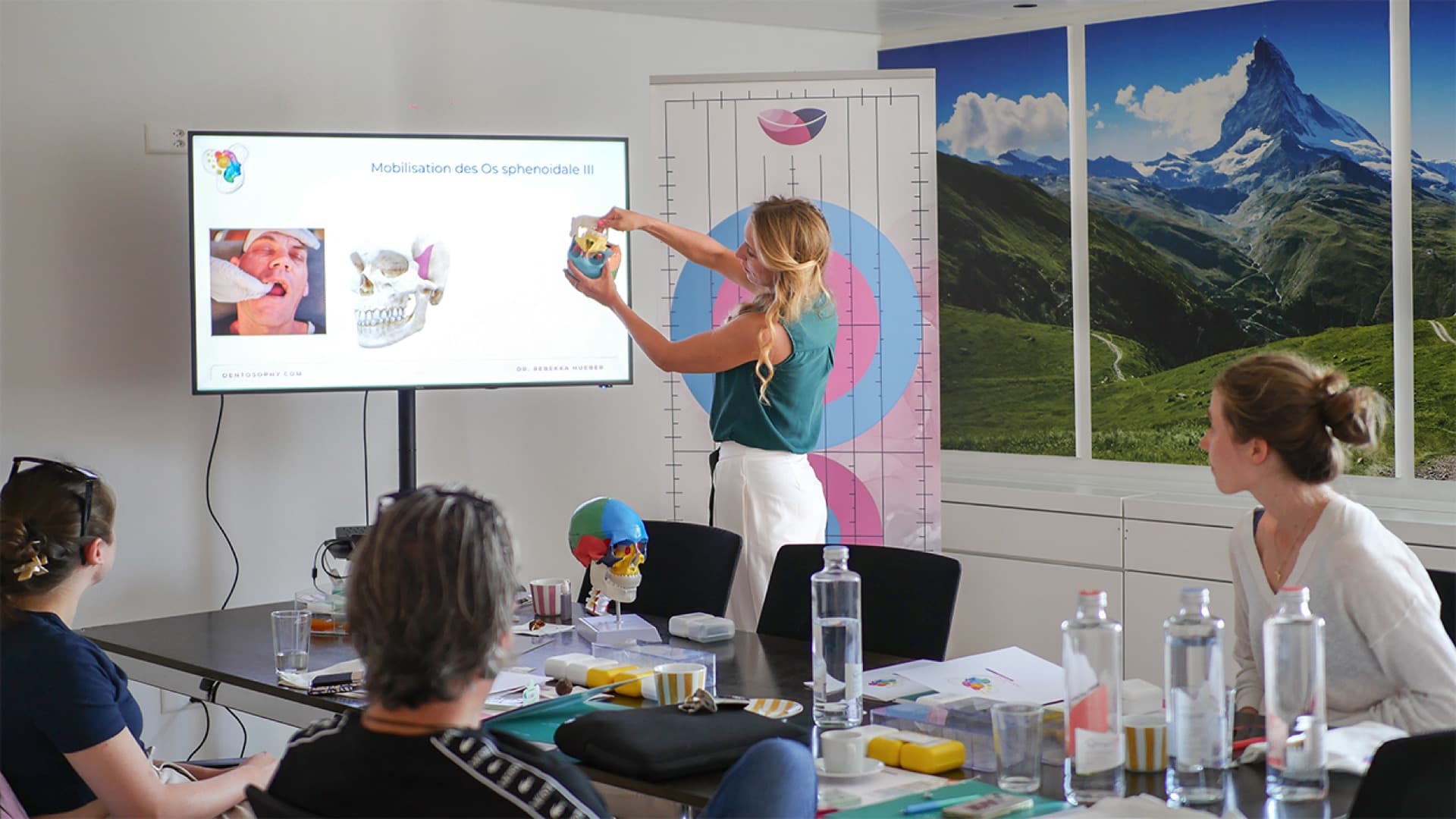
A personal conversation.
Whether the training fits you and your practice, the content, format and dates – you discuss it directly with Dr. Hueber in an intro call. No obligation.
Four paths, one system
Where do you stand?
From practice
Trained practitioners on the method
I realized I was missing the functional part. I had understood implants, surgery, nutrition and systemic links, but I hadn't truly integrated breathing, chewing and swallowing. Once I added that, it completed the picture and connected everything.
 Dr. Alaa NarouzDentist, Cologne (DE)Visit the practice
Thank you for an efficient, informative and immediately applicable curriculum.
 Dr. Corbin PoppDentist, Denver (USA)Visit the practice
I was searching for a curriculum like Dentosophy for a long time. This is the missing link in my holistic concept.
 Dr. Pompilia BeleanDentist, Austin (USA)Visit the practice
Dentosophy finally brings it all together. An all-in-one concept I can immediately integrate into my biological treatments.
 Dr. Linda GoldenDentist, New York (USA)Visit the practice
Why here – and not just anywhere
You get more than dentosophy.
You learn dentosophy not in isolation, but embedded in several specialties that come together in one person – from the whole craniofacial system.
Who trains you
- Over 50 practices trained worldwide – USA and DACH
- Instructor in ceramic implantology · international speaker
- Publications incl. Journal of Oral Implantology 2023 (PubMed)
United in one hand
Oral surgery
Board-certified specialist – the surgical foundation.
Orthodontics
M.Sc. — where the limits are and where it interlocks.
Myofunctional therapy
Training nasal breathing, tongue function and balanced chewing.
Dentosophy
Craniofacial balance through muscle forces.
Biological dentistry
Metal-free, treating the cause.
Ceramic implantology
Dentosophy as the ideal preparation: function first, then the implant.
Sports dentistry
Connecting bite, posture and performance.
Not just the oral cavity. The whole person.

Not a professional?
Dentosophy for patients
Mouth breathing, snoring, crooked teeth: the mouth often whispers before the body shouts. Learn what dentosophy explores and find a practitioner near you.
Gentle and removable – an approach used with children too. Whether and when braces belong to it is the orthodontist's call.
Good to know
Questions, answered
Functional patterns – breathing, tongue rest position, swallowing – form in the first years of life and keep acting for as long as the jaw grows. That is why many practitioners look at them while the milk teeth are still in place. This way of thinking has no “too late”: functions can be practised at any age. What changes with growth is how much functional work can accompany on its own, and when it is flanked by orthodontics. Whether, when and how anything makes sense for your child is assessed by a trained practice after individual diagnostics.
Ready when you are
Ready when you are
Whether you are a professional or a patient: arrange a free intro call, or find help near you.